
Seeing “Perfectly”? You Could Still Be Losing Vision — The Truth About Glaucoma
Most people think they’ll feel it when something is wrong with their eyes. Pain. Blurry vision. Redness. Something obvious.
But glaucoma doesn’t work that way.
Glaucoma is known as “the silent thief of sight” because it steals vision slowly, quietly, and permanently — often without symptoms until significant damage has already occurred. That’s why regular eye exams matter far more than most people realize.
As Dr. Jeff Broadhead often says:
“The people who see great and never come in are the ones that worry me the most.”
At Progressive Eye Care in South Jordan, we diagnose and treat glaucoma every day — often in patients who thought their eyes were completely healthy. If you live in South Jordan, Herriman, Riverton, West Jordan, Draper, or Sandy, this is what you need to know to protect your sight.
What Exactly Is Glaucoma?
Glaucoma is a group of eye diseases that damage the optic nerve — the “cable” connecting your eye to your brain. Once optic nerve fibers are lost, they cannot be restored.
The most common type (open-angle glaucoma):
-
Causes no pain
-
Does not affect sharpness of vision at first
-
Progresses quietly for years
-
Steals peripheral (side) vision first
-
Only becomes noticeable when significant damage has occurred
By the time patients “notice” glaucoma on their own, up to 40% of optic nerve tissue may already be gone.
That’s why early detection is everything.
Who Is at Risk? More People Than You Think
You may be at higher risk if you have:
-
A family history of glaucoma
-
High eye pressure
-
Age over 40
-
Thin corneas
-
Diabetes
-
High myopia (nearsightedness)
-
A history of eye injuries or steroid use
But here’s the important part:
Glaucoma often strikes people who had no known risk at all.
That’s why routine eye exams are essential for everyone.
Why You Won’t Feel It — Until It’s Advanced
Unlike many eye problems, glaucoma doesn’t cause blurry vision early on. Central vision stays sharp, so patients feel like nothing is wrong.
Meanwhile, peripheral vision slowly narrows… like a picture frame closing tighter and tighter.
Without screening, glaucoma can progress undetected until daily activities become difficult:
-
Trouble driving
-
Bumping into things
-
Difficulty seeing in dim lighting
-
Loss of contrast sensitivity
But regular eye exams catch changes years before symptoms appear.
How We Detect Glaucoma Early (Long Before You Notice Anything)
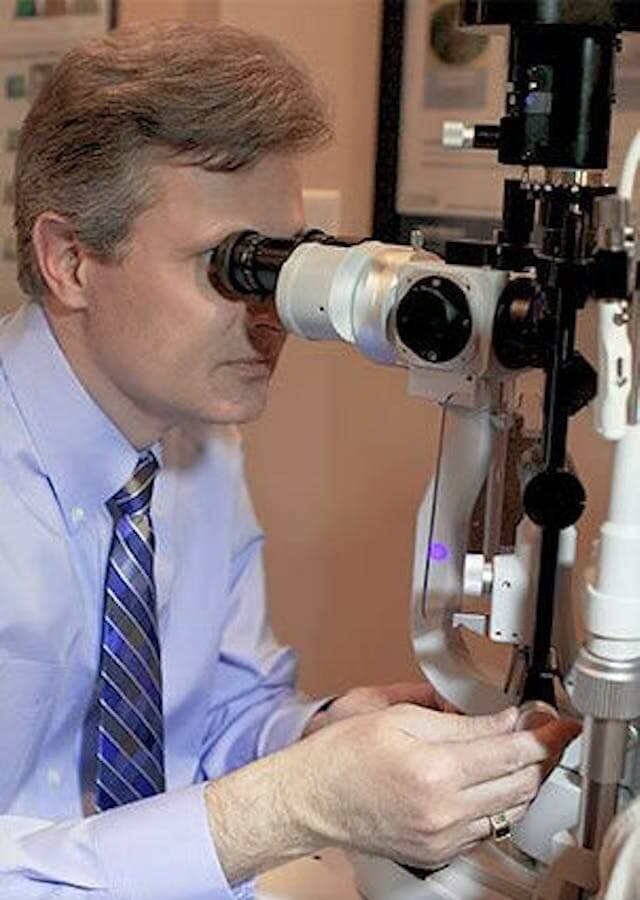
At Progressive Eye Care, our glaucoma screening includes:
✔ OCT scans
A painless, high-resolution scan of the optic nerve — essential for detecting early damage.
✔ Visual field testing
Measures your peripheral vision with extreme accuracy.
✔ Eye pressure measurement
Important — but not enough on its own.
✔ Optic nerve evaluation
Our doctors assess subtle changes invisible to the untrained eye.
Early detection is the difference between lifelong vision and irreversible loss.
How Glaucoma Is Treated (Good News: It’s Very Treatable When Caught Early)
Most glaucoma can be managed with:
• Prescription eye drops
Reduce and control eye pressure effectively.
• Laser treatments
Can improve drainage and lower pressure.
• Advanced medications or surgical options
Used when needed in more complex cases.
The key is consistent monitoring and early intervention — which dramatically reduces the likelihood of significant vision loss.
Why Some People Lose Vision — and Others Don’t
The difference almost always comes down to timing.
Early glaucoma + regular follow-up = stable vision for life
Late glaucoma + delayed care = permanent, progressive loss
That’s why Dr. Jeff worries about “people who see great and never come in.”
They’re the ones glaucoma sneaks up on.
If You’re Over 40, This Is Your Wake-Up Call
You get your teeth checked.
You get your physicals.
You change the oil in your car.
But many people go five to ten years without an eye exam… even though glaucoma can rob vision in that exact timeframe.
It’s time to make your eye health a priority — especially if you’ve been putting it off.
Your Eyes Are Worth Protecting — And We’re Here to Help
At Progressive Eye Care in South Jordan, our glaucoma team —
Dr. Jeff Broadhead, OD; Dr. Michael Hope, OD; Dr. Michael Chism, OD; and Dr. Ana Schroeder, OD — uses the most advanced diagnostic tools in Utah to detect glaucoma early and protect your sight for life.
We have cared for families across South Jordan, Herriman, Riverton, West Jordan, Draper, Sandy, and the greater Salt Lake Valley for more than two decades.
Your vision matters.
Your future matters.
And you don’t get a second chance with glaucoma.
Take the Next Step — Protect Your Eyes Today
If you’ve noticed ANY vision changes… or haven’t had a comprehensive eye exam in over two years… don’t wait.
📞 Call us today: 801-676-2020
🌐 Schedule your exam online 24/7
👉 www.progressive-eyecare.net
Glaucoma steals sight silently.
But with early care — you can stop it in its tracks.